
A Simple Question That’s Hard to Answer: “What Are You Feeling?”
Before you understand what you need, begin by knowing what you feel.

Dear friends,
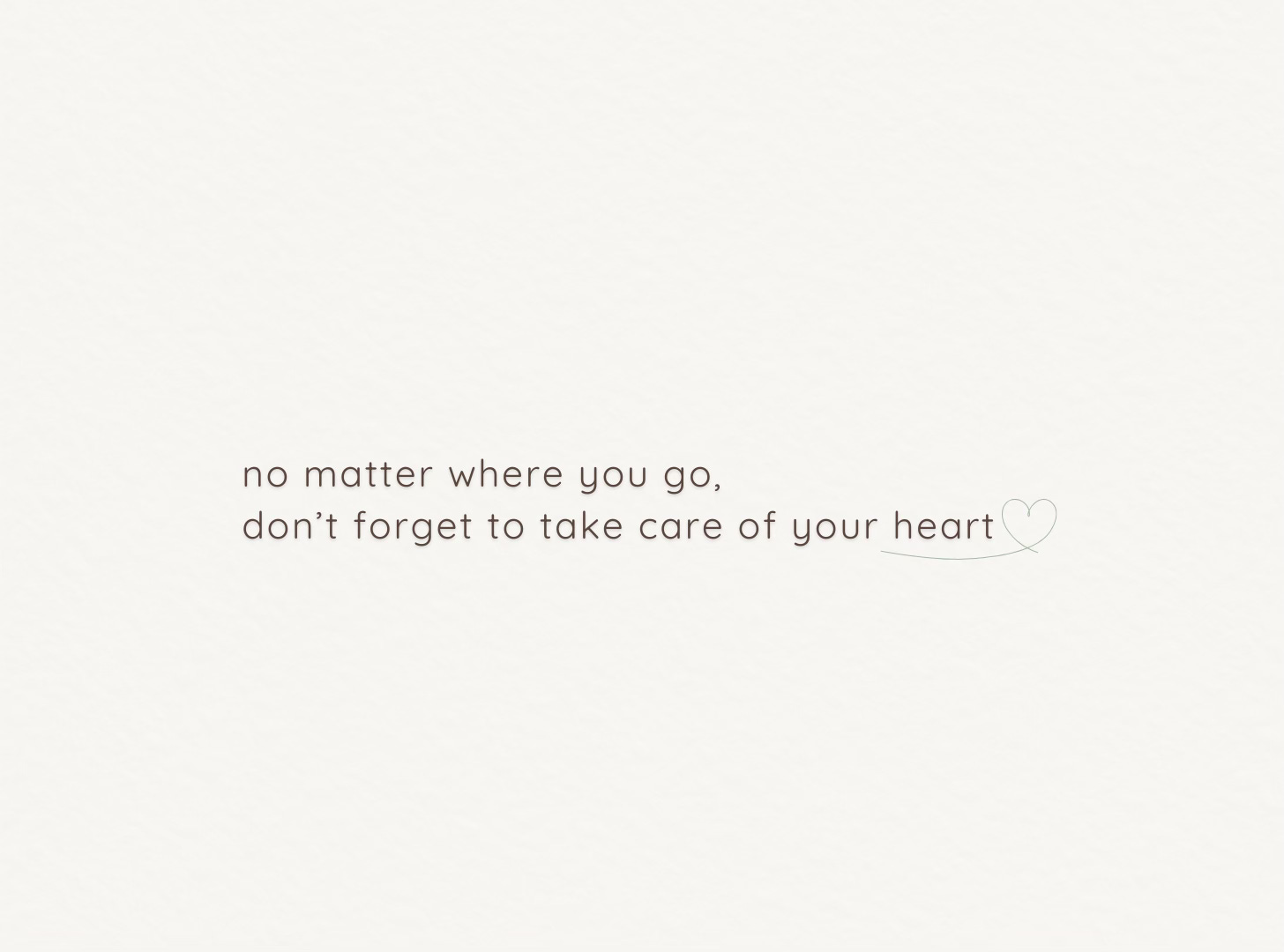
“No matter where you go, don’t forget to take care of your heart.” This saying resonates deeply with me and encapsulates the message I’ve been emphasizing throughout the year. I came across this quote in a Taiwanese TV series titled “A Thousand Goodnights.”
As we grow older, we long to go places—to explore the vast world we once dreamed of as children. We prepare so many things for that journey, yet rarely do we learn how to take care of our own hearts along the way.
In previous articles, I’ve spoken about pausing from different angles.
Pausing is like cold brewing tea—it takes time for the essence to slowly unfold. In the same way, pausing isn’t about standing still, but about slowing down long enough for what’s within us to surface.
But because facing what lies beneath isn’t always comfortable, we tend to avoid it—just like how we skip dishes we don’t like. The truth is, there are simply things we’re not ready to face yet.
There are also patterns that keep repeating in our lives, making us wonder: “Why does this keep happening to me?”. Perhaps this is when we need to pause—like wiping the fog off a pair of glasses—so we can begin to see more clearly.
If pausing is the first step in caring for your heart, then the next step is:
Noticing.
We need to learn how to notice what is happening within us.
Because if we don’t notice, we cannot understand ourselves—and if we don’t understand ourselves, who else can do it for us?
How do we notice?
Let me ask you a simple question:
Right now, what are you feeling?
Can you name it?
If that feels difficult, that’s completely okay.
Many of us don’t have a rich enough emotional vocabulary. Especially in many Asian cultures, where expressing emotions —particularly the “negative” ones— is often discouraged. Over time, we get used to summarizing everything with a few vague words… or not naming it at all.
Just like “uncomfortable” that isn’t a precise feeling. It might be restlessness, agitation, unease, overwhelm, or emotional fatigue.
Similarly, “happy” also holds many shades—joyful, excited, delighted, uplifted…
Even when you say you feel “fine”, it could actually be calm, content, or at ease.
When you begin to name your feelings more specifically,
you’ll realize how many subtle shades exist within each emotional state.
Why does naming emotions matter?
Because every emotion is a message. If you don’t understand it, you won’t know what you truly need.
Where do you start?
You can begin by simply observing:
What is happening in your body?
(your heartbeat, your breath, tension, warmth, or cold…)Are there any thoughts or inner narratives accompanying it?
What is this feeling urging you to do?
You don’t have to react or judge right away. Just pause and observe. And when you notice your breath or heartbeat shifting, gently return to a steady breath.
With practice, over time, this will make a difference.
A gentle practice
You might want to start an emotion journal.
Whenever something moves you, write down:
What is happening in your body?
What thoughts are present?
What is this feeling urging you to do?
Over time, you’ll begin to see the emotional landscape of your inner world—more clearly and vividly.
What matters most is this: Give yourself permission to pause.
Because without that pause, it’s easy to be pulled back into old patterns and familiar loops.
Let your emotions be present. Learn to befriend them. Emotions are not wrong—they’re simply not yet understood.
I’ll walk with you through this in the next article.
And remember that we are trying:
“Not to become a better version of yourself, but to live more peacefully with who you already are.”
Thank you for staying with this story.
With warmth,
See you in the next.
This newsletter is a quiet space for inner stability and meaningful living.
You’re welcome to return anytime.
ivythule.substack.com
Thank you for being here.
— Ivy Thư Lê